
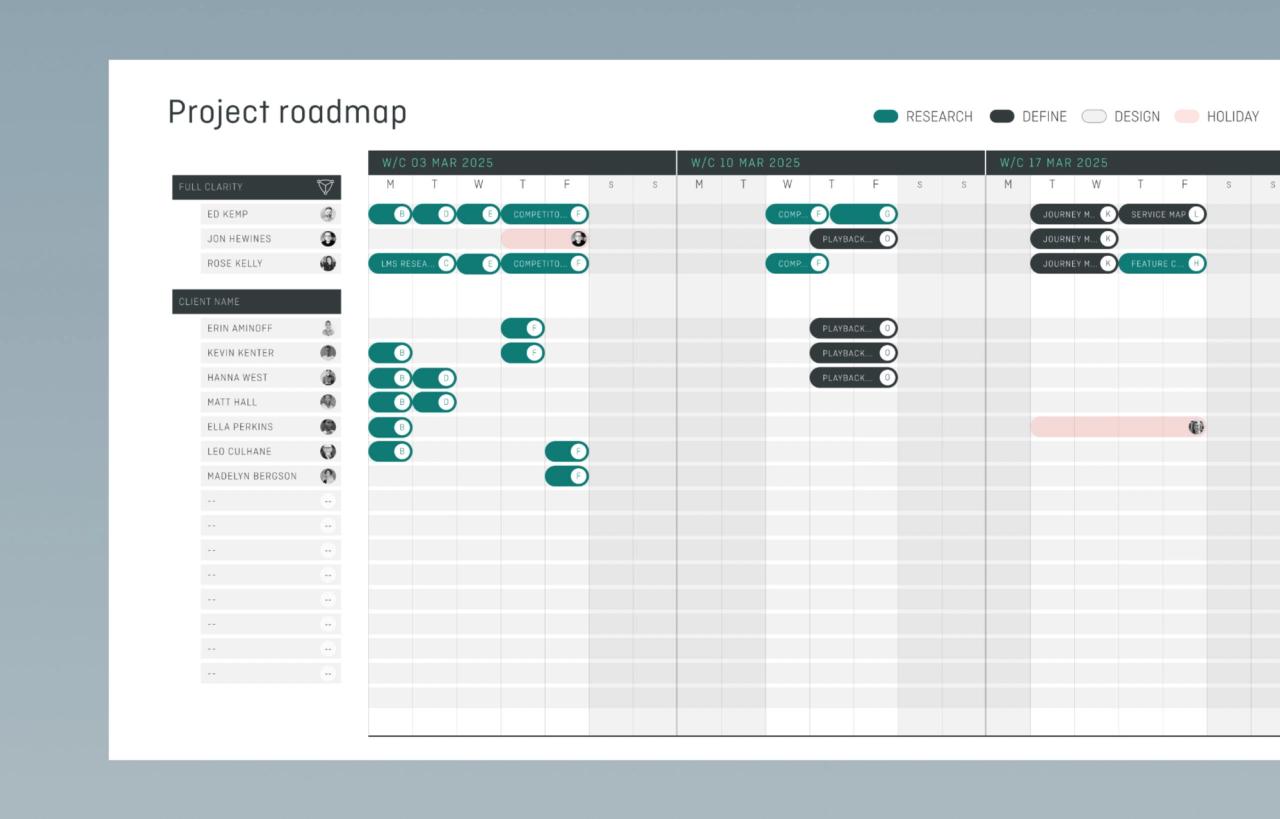
Roadmap definition

A roadmap definition sets a clear direction for your digital product, aligning design, delivery, and business priorities around shared outcomes. It transforms strategy into an actionable plan, giving product teams confidence that each phase of work is connected to real customer needs and measurable business goals.

A shared plan for progress

At its core, a roadmap is a communication tool. It gives visibility across the project, showing how ideas move from concept to release. For product managers and stakeholders, it provides clarity on priorities, milestones, and dependencies. For designers and developers, it offers structure and alignment with wider business objectives.

Defining a roadmap early ensures that everyone understands what is being delivered, when, and why. It connects strategic intent to day-to-day decisions, helping teams stay focused on the work that creates the most value for users and the business.
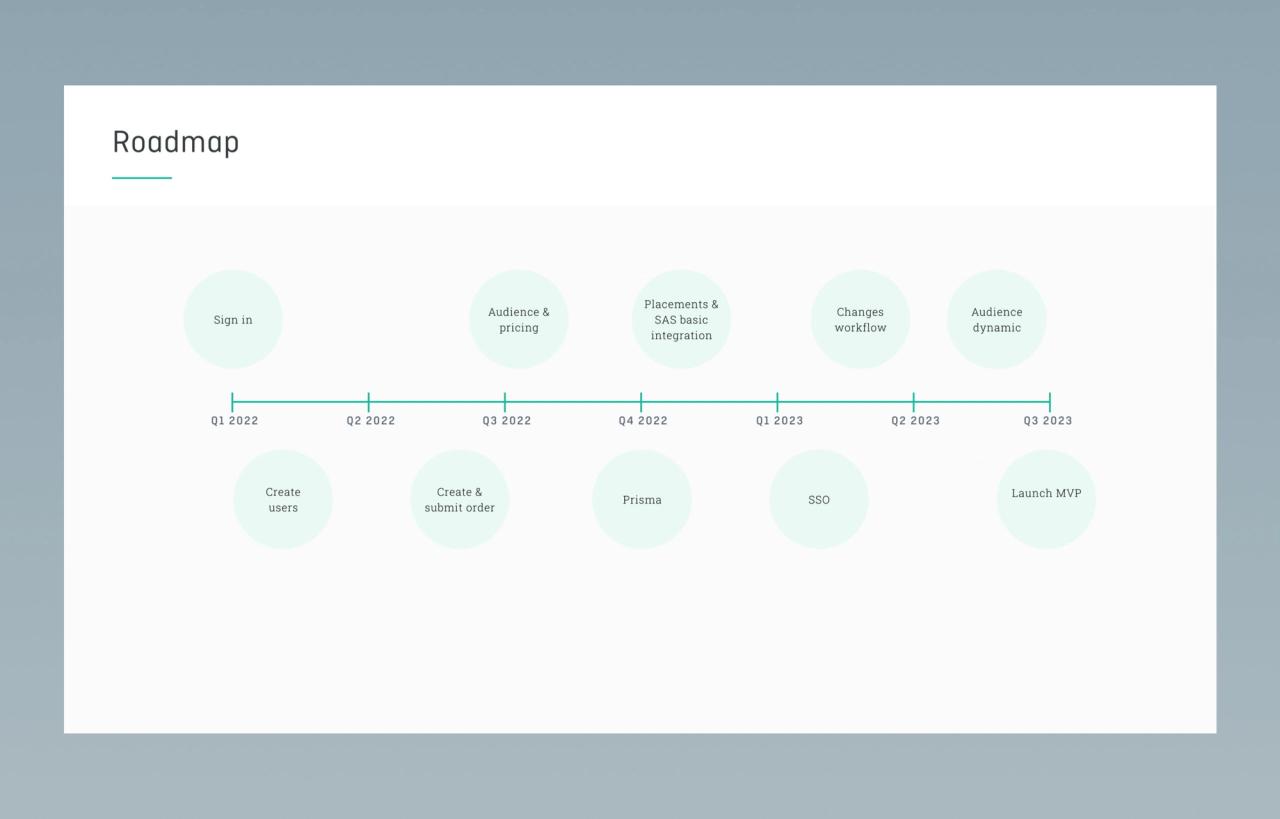

What roadmap definition involves

Our roadmap definition process typically begins once the discovery and technical feasibility stages are complete. This is when insights from user research, market trends, and business analysis are combined to shape a clear delivery plan.

Each roadmap we create is designed to be flexible and evidence-based. Rather than a static timeline, it acts as a living plan that adapts to new insights, user feedback, and changing market conditions. The process usually includes:

  • Defining key milestones: Structuring phases around product features, releases, and measurable outcomes.
  • Prioritising user needs: Translating customer needs and pain points into clear objectives for the product team.
  • Resource allocation: Identifying which people, skills, and tools are required for each phase of delivery.
  • Planning release roadmaps: Mapping iterative launches and updates, whether for a minimum viable product (MVP) or a full platform release.
  • Identifying dependencies: Highlighting where technical or design work overlaps across teams to prevent delays.
  • Validating assumptions: Using research and feedback to test priorities before development begins.

This structure ensures that roadmap definition becomes a bridge between strategy and implementation, supporting both short-term deliverables and long-term vision.

Aligning design, development, and strategy

A good roadmap does more than outline deadlines. It creates alignment between product management, UX design, and technical delivery. It gives product managers a view of how each decision supports business goals, while giving designers and developers clarity on what success looks like at every stage.

For Full Clarity, roadmaps are collaborative tools. We create them through structured workshops and transparent discussions with clients, ensuring that every voice from leadership to hands-on teams is represented. This inclusive process builds trust, accountability, and shared ownership of the plan.

An adaptive approach to delivery

Markets change, customer needs evolve, and digital products must adapt. That’s why we see a roadmap as a living framework, not a rigid document. By revisiting and refining it regularly, product teams can respond to new insights from user feedback, A/B testing, or performance data without losing sight of core business objectives.

This adaptability also supports faster decision-making and better resource management. When priorities shift, the roadmap helps teams pivot with confidence, ensuring that every iteration continues to deliver value to both users and the business.

Why roadmap definition matters

Roadmap definition brings structure and foresight to the digital product lifecycle. It helps teams plan around real constraints, communicate expectations, and deliver features that truly meet customer needs. With a clear view of dependencies, timings, and goals, projects stay on track and aligned with strategic outcomes.

Typical outcomes include:

  • A shared roadmap aligning all stakeholders around product goals
  • Clear visibility of milestones, dependencies, and resources
  • Faster, more confident delivery cycles for each product release
  • An adaptable framework for managing change and iteration
  • Stronger collaboration between UX, product management, and development teams

A well-defined roadmap is more than a project plan; it’s a shared commitment to progress. By combining insight, collaboration, and clarity, we help teams build digital products that grow sustainably and deliver lasting value.

FAQs

What is the purpose of a product roadmap?

A product roadmap provides a clear view of priorities, dependencies, and timelines. It helps align teams around shared goals, ensuring that design, development, and business stakeholders are all working toward the same objectives.

How does roadmap definition fit into a digital project?

Roadmap definition usually takes place after discovery and before detailed design or development. It turns early insights and technical feasibility findings into a phased plan for delivery, bridging strategy and execution.


How often should a roadmap be updated?

A roadmap should evolve as new information emerges. We recommend reviewing it regularly, especially after usability testing, major releases, or shifts in business priorities. This keeps the plan relevant, realistic, and aligned with user and organisational needs.


What does a typical roadmap include?

A roadmap usually outlines phases, milestones, and dependencies across workstreams such as design, content, and development. It can also include release targets, KPIs, and ownership details to support effective delivery.

Book a virtual coffee

Speak directly with our founders Ed and Jon about how we can help you on your Innovation or Transformation project.

Contact
Ed & Jon

Contact details

Find us

Cheyenne House
West Street
Farnham, Surrey
GU9 7EQ

Cheyenne House
West Street
Farnham, Surrey
GU9 7EQ

Contact form

Looking for a long term partner to support your business?

By browsing our website you agree to our cookie policy. You can opt-out anytime from our cookies page