Product health check

A product health check assesses and evaluates the health status of a product across various parameters, to identify any issues it may be experiencing and improve its overall performance.

Health check

Enhance performance

A health check is a detailed and structured assessment that examines how a product is performing across a range of product health metrics. It looks closely at different aspects of the product to identify strengths, weaknesses and areas that can be improved. The purpose is to give a clear, evidence-based picture of the product’s overall health and effectiveness.

By carrying out a health check, product teams and product managers gain valuable insight into the product’s current condition and a better sense of control over its future direction. Armed with a detailed understanding of the issues, together with a plan for resolving them, teams can make confident and well-informed decisions. This allows them to prioritise improvements that will deliver the greatest value to both the business and its users.

The benefits of a health check are twofold. For active users, resolving issues that surface during the process can remove friction, improve usability and create a more enjoyable and effective experience. This can directly increase satisfaction, loyalty and retention. For the business, improving the product’s usability, speed, accessibility and stability often results in higher user engagement, reduced churn rate, better conversion rate and improved revenue.

Types of health checks

When we offer a product health check to our clients, the form it takes will depend on the product and the specific challenges it is facing. A tailored approach ensures the process focuses on the areas that matter most for that specific product. The following are common components of a health check.

  • Accessibility audit: A detailed review of compliance with accessibility standards and guidelines, identifying barriers that may prevent people with disabilities from using the product effectively.
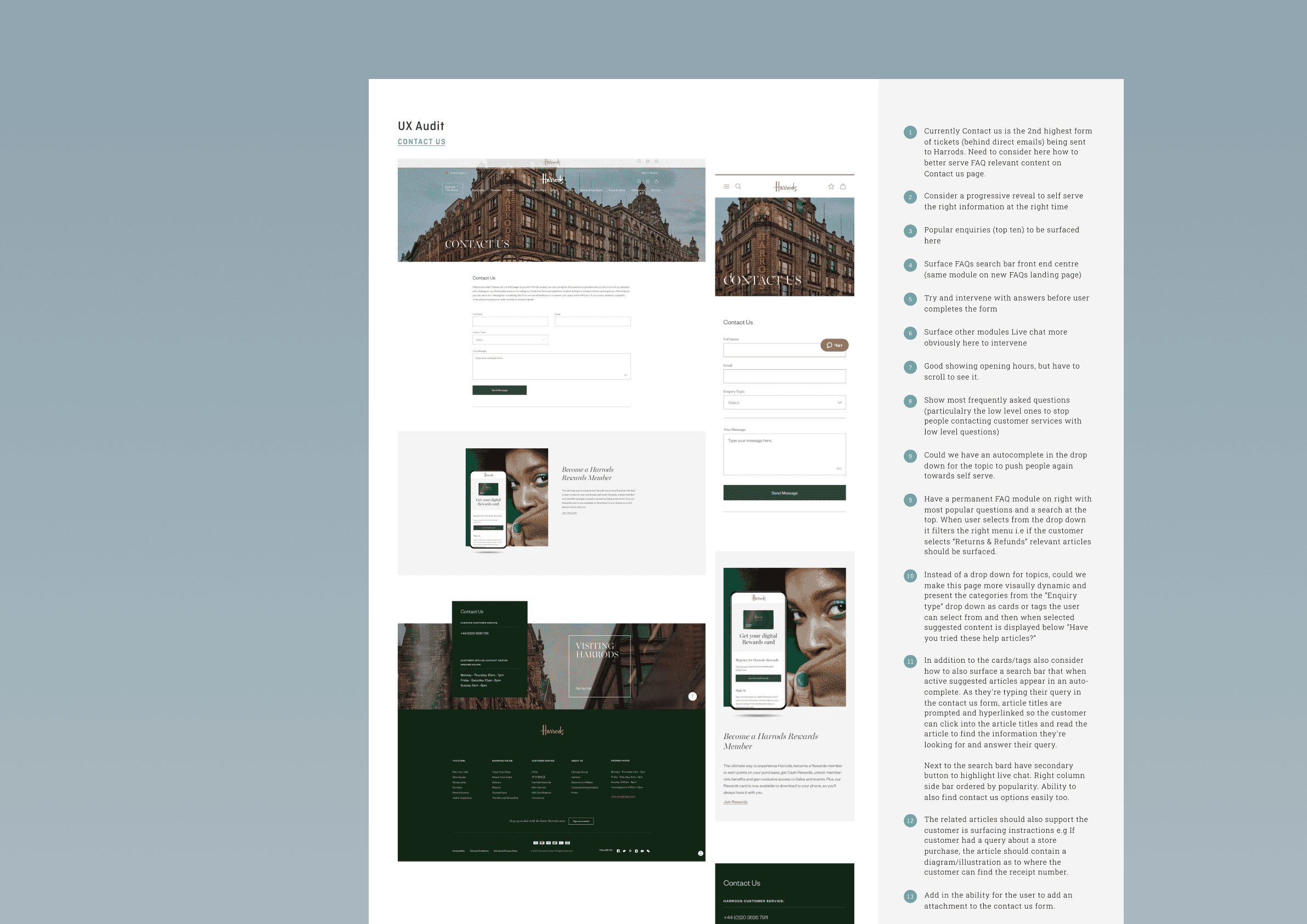
  • UX audit: A thorough review of the user experience, breaking down each aspect of the product to identify usability issues and opportunities for improvement.
  • Speed testing: Evaluation of how quickly the product responds under normal and heavy use, identifying performance bottlenecks that may frustrate active users and reduce session duration.
  • Performance testing: Assessment of the product’s responsiveness, stability and reliability under different conditions, ensuring it meets user expectations in real-world use.
  • Technical debt review: Examination of areas where earlier development shortcuts or compromises have created inefficiencies or potential risks that now need to be addressed.
  • Design debt review: Identification of inconsistencies or incremental changes, such as additions to navigation or layout, that have reduced design clarity and harmed the user experience.
  • Lighthouse score review: Analysis of performance, accessibility, best practices and SEO using Google’s open-source Lighthouse tool.
  • Retrospective review: Reflection on completed work, often at the end of a project or sprint, to identify successes and challenges that can inform future improvements.

Sustained refinement

Once the assessment is complete, the product health check produces a detailed and prioritised list of issues. These can range from technical bugs and slow load times to usability problems and accessibility gaps. The prioritisation process ensures that urgent and high-impact issues are addressed first.

Alongside the technical and design review, the process may also include collecting and analysing user feedback and product analytics data. This makes it possible to pinpoint exactly where users are experiencing difficulties, ensuring that recommendations are based on evidence rather than assumptions.

The final stage of the product health check is to create a roadmap for improvement. This outlines the actions required to address each issue, along with timescales and responsibilities. By aligning these recommendations with the organisation’s broader product strategy and value proposition, teams can ensure that the work done not only improves the product but also supports the wider goals of the business.

A health check is not a one-time activity. Running them regularly, for example every few months or once a year, helps to ensure that problems are detected early, progress is monitored and the product continues to evolve in line with user needs and market expectations. Tracking feature adoption rate, net promoter score, and customer satisfaction score helps measure whether improvements are translating into higher loyalty and retention.

Typical outcomes include

  • A clear, prioritised list of technical, design and usability issues
  • Evidence-backed recommendations for resolving them
  • Measurable improvements in performance, accessibility and SEO scores
  • Reduced friction in critical user journeys
  • Increased customer satisfaction, loyalty and retention
  • Improved conversion rate, longer session duration, reduced churn rates and growth in monthly recurring revenue
  • A roadmap for improvements aligned with business strategy

FAQs

How often should we run a product health check?

For most products, running a health check once or twice a year is enough to spot emerging issues before they become costly problems. Products that evolve quickly, handle high traffic or serve critical user needs may benefit from quarterly checks.

What is the difference between a health check and a UX audit?

A UX audit focuses specifically on the user experience, while a health check is broader and also examines technical performance, accessibility, SEO and design consistency. A health check can include a UX audit as one of its components.


Will a health check require changes to the live product?

Not immediately. The process identifies and prioritises issues, but changes are only made once the findings have been reviewed, agreed and planned with the product team. This ensures improvements are made in a controlled and coordinated way.


Book a virtual coffee

Speak directly with our founders Ed and Jon about how we can help you on your Innovation or Transformation project.

Contact
Ed & Jon

Contact details

Find us

Cheyenne House
West Street
Farnham, Surrey
GU9 7EQ

Cheyenne House
West Street
Farnham, Surrey
GU9 7EQ

Contact form

Looking for a long term partner to support your business?

By browsing our website you agree to our cookie policy. You can opt-out anytime from our cookies page