Identifying user experience issues
While a UX/UI audit can be completed on any existing platform, we typically carry them out on transformation projects, where an existing product or service that’s outdated or underperforming. Without a clear picture of what’s going wrong, it can be difficult for teams to make meaningful progress on uncovering the causes of the underperformance. A UX audit, however, provides that clarity, helping to identify the specific issues that are holding the product back.
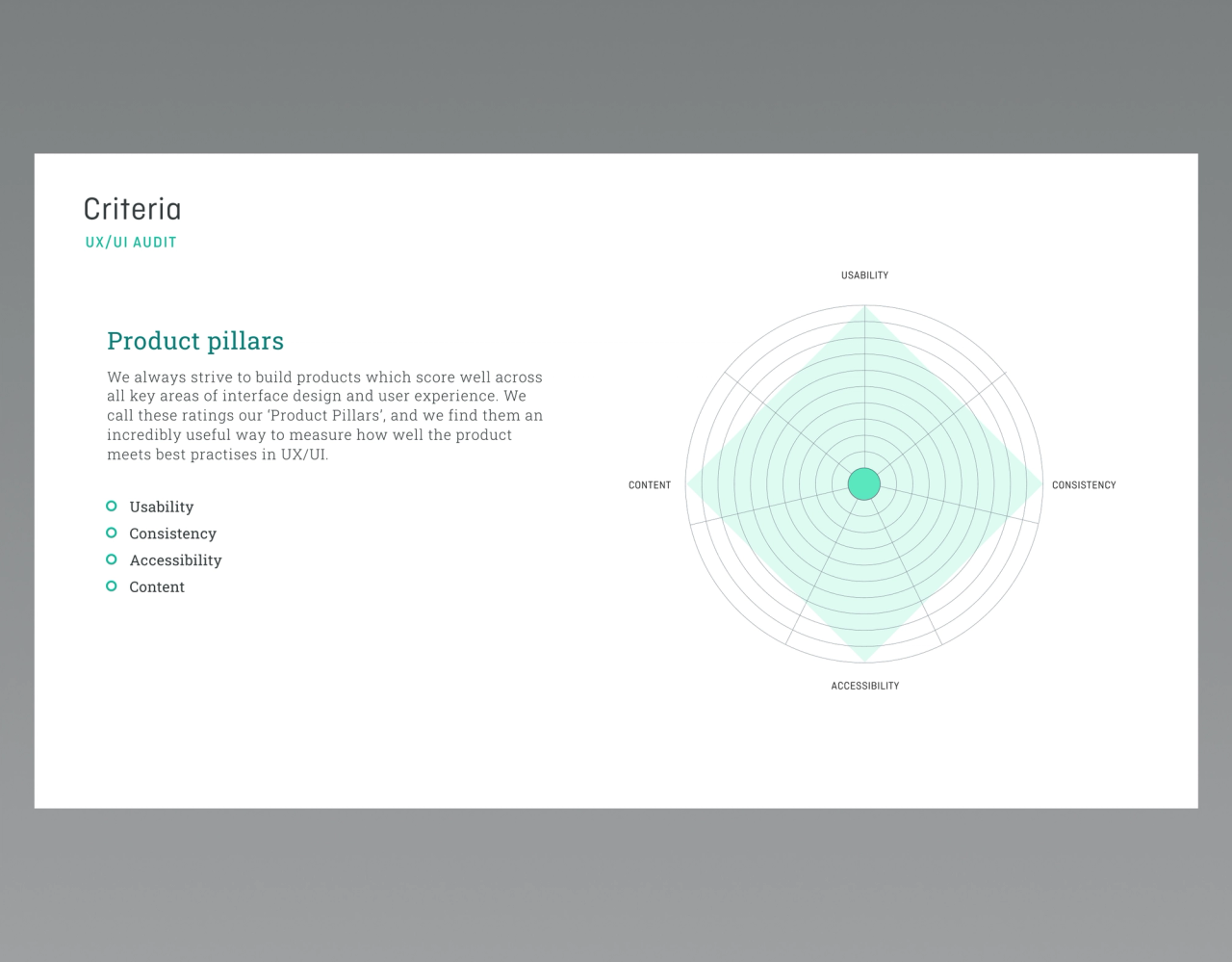
Discovering, understanding, and acting on these insights lead to better usability, higher engagement, improved accessibility, and stronger user satisfaction. They also help designers create more effective, user-friendly experiences that support both business and user goals.
A UX audit can reveal:
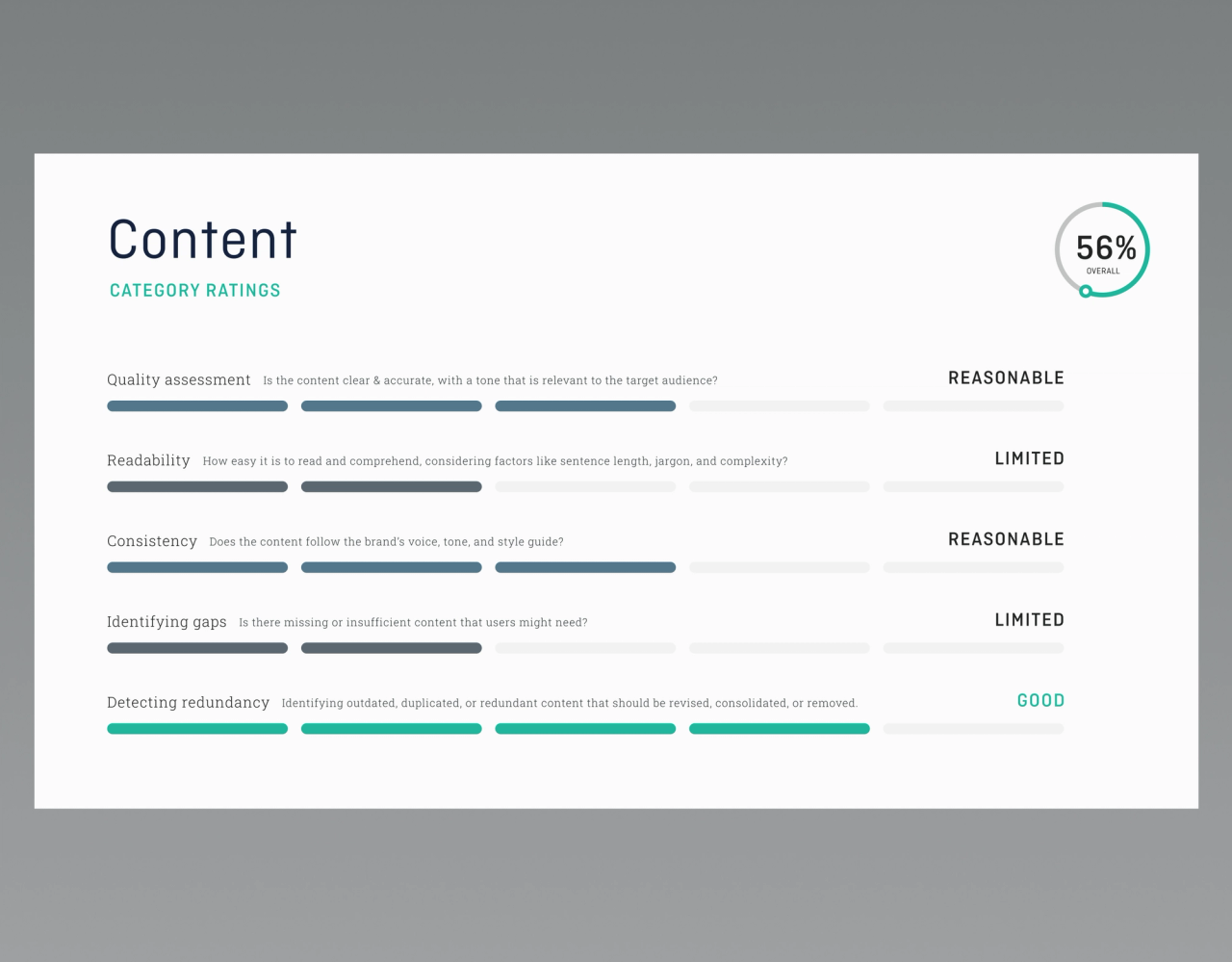
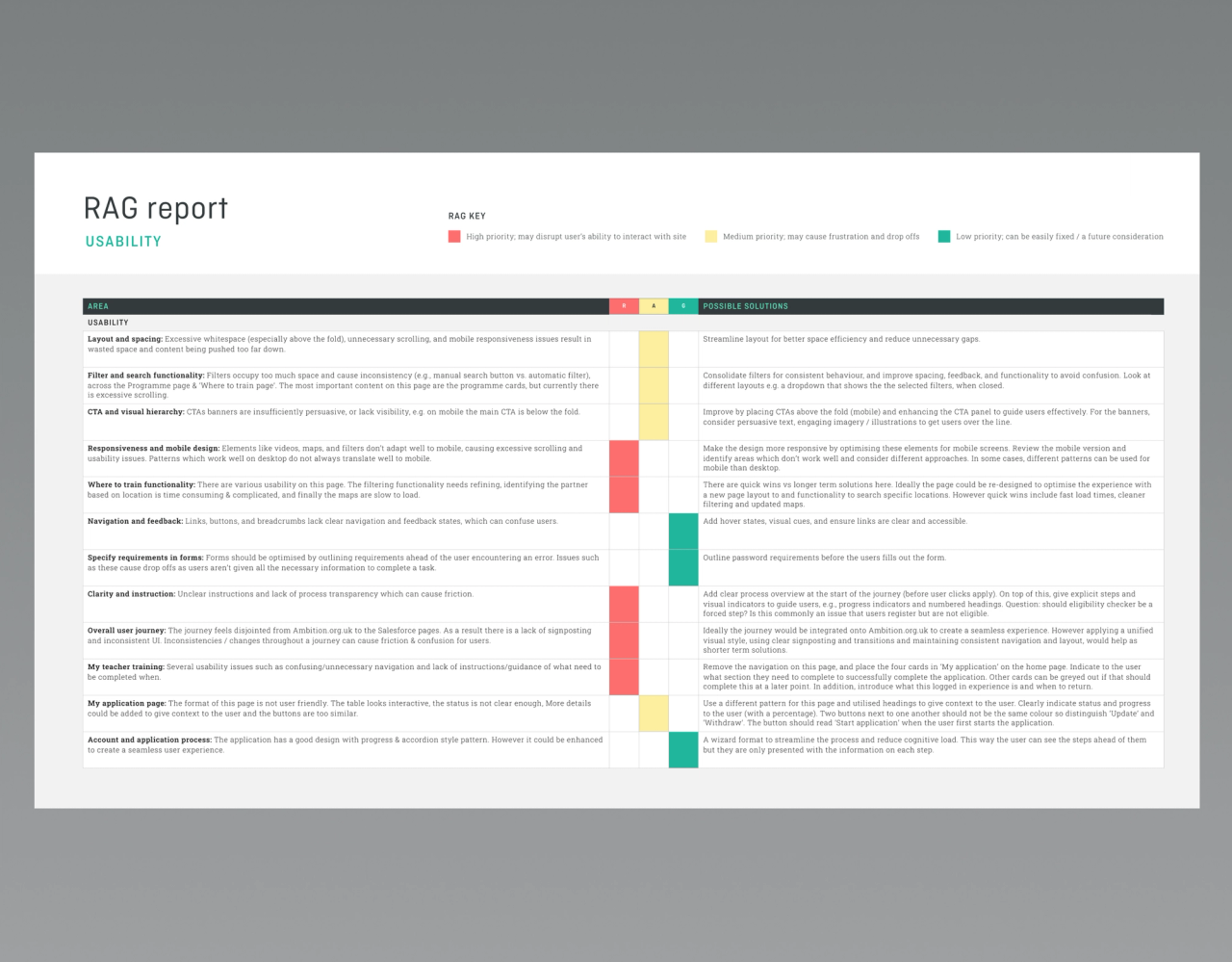
- Usability issues: confusing navigation, unclear instructions, or complex user interfaces that make it hard for users to complete tasks.
- Inconsistent UX: differences in the experience across pages or sections, disrupting a smooth user journey.
- Accessibility barriers: features or layouts that exclude users with disabilities, or fail to meet accessibility standards.
- Information architecture challenges: poor organisation of content that makes it harder for users to find what they need.
- Brand inconsistency: design elements that don’t align with your brand identity or break established guidelines.
- Competitive gaps: areas where your product falls behind competitors and could improve.
- Outdated design practices: legacy approaches or tools that create friction and reduce effectiveness.