Identifying barriers
Addressing accessibility is key to creating digital experiences that accommodate diverse users, regardless of ability. It also supports legal compliance, strengthens user trust, and contributes to long-term product sustainability. When inclusivity is neglected, you limit your audience, risk reputational and legal issues, and miss the opportunity to create meaningful connections with users who rely on accessible design.
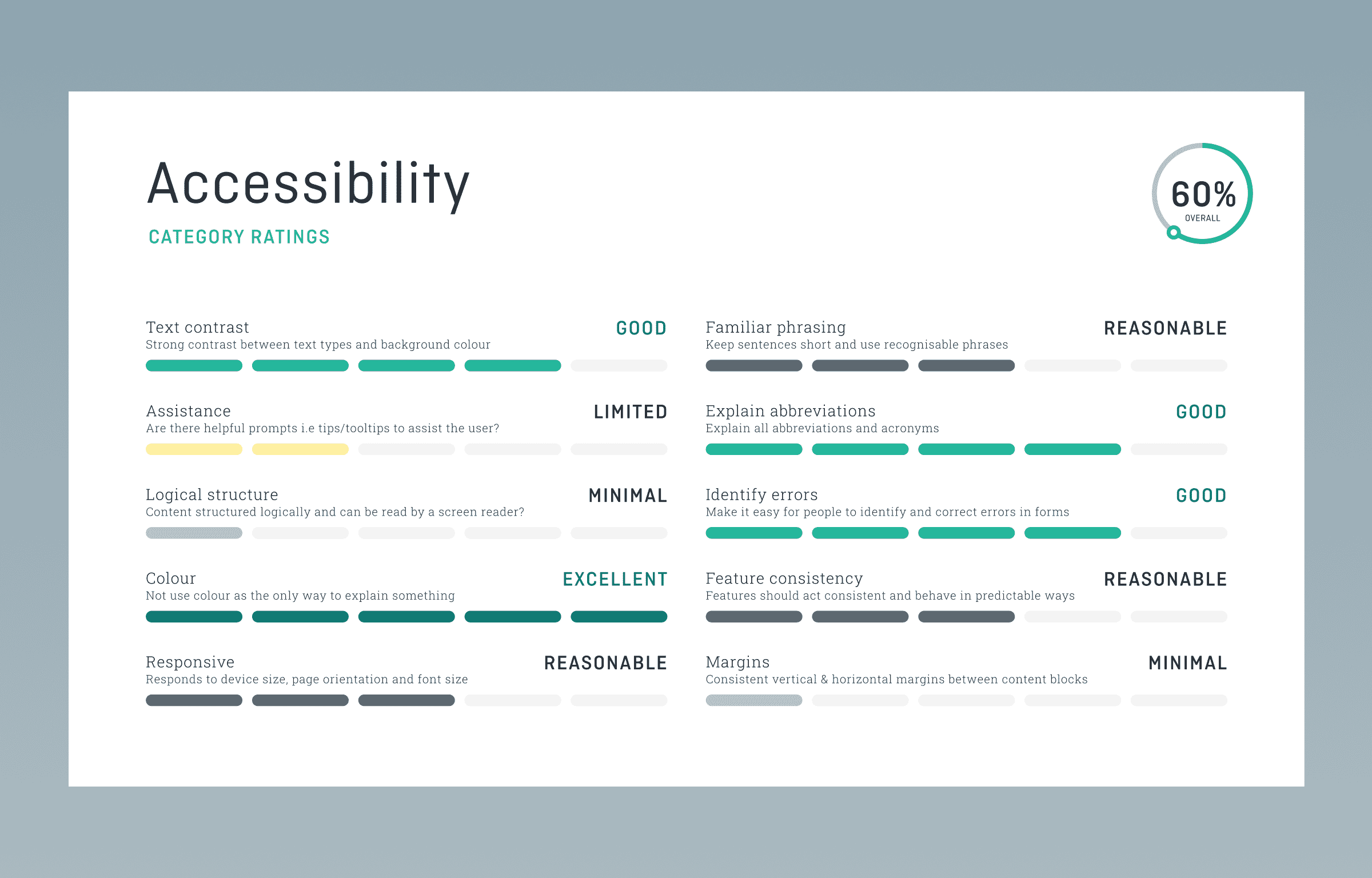
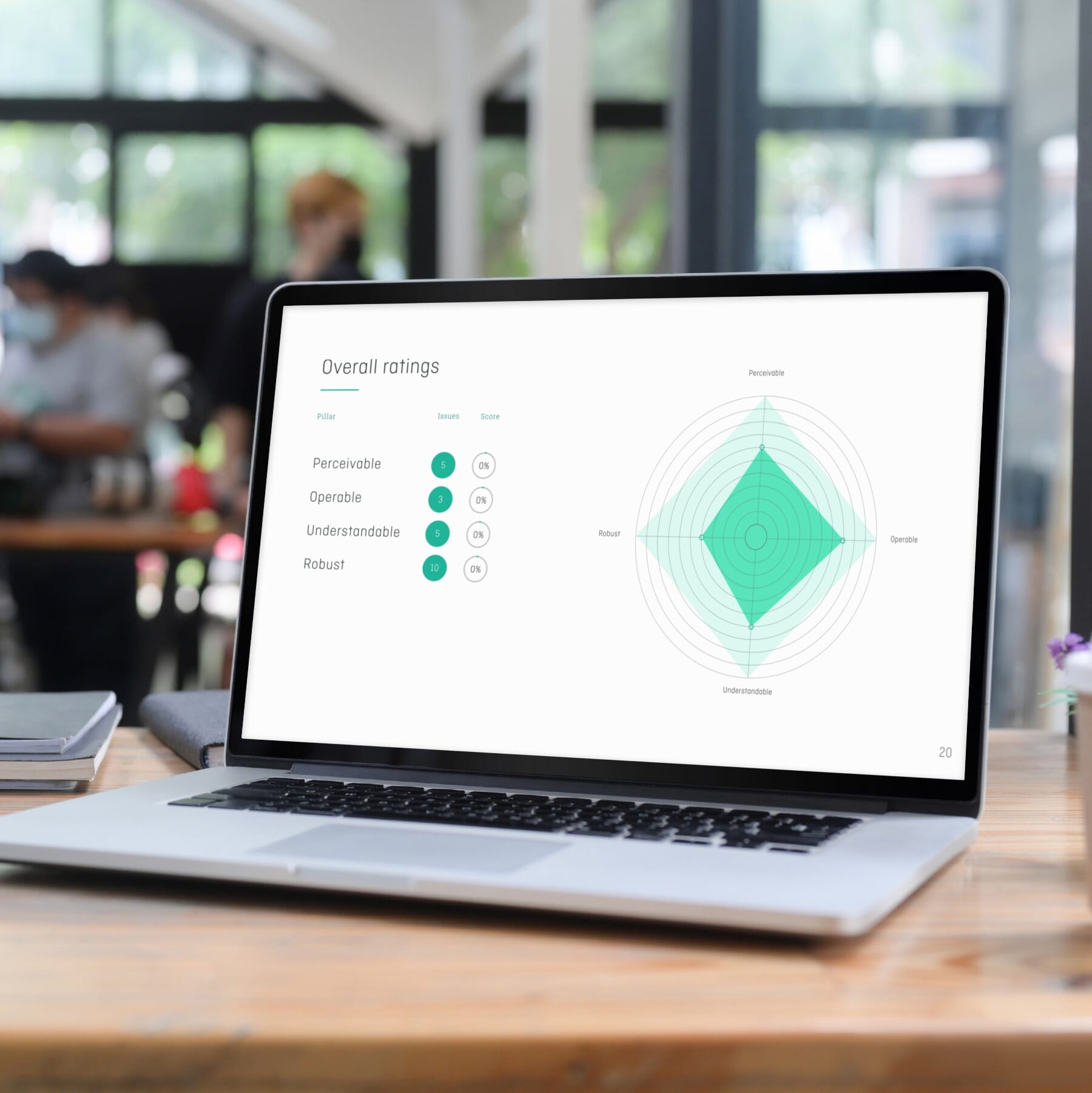
Our accessibility audits help uncover a range of issues, such as:
- Barriers to access – identifying what prevents users with disabilities from using your product effectively
- Non-compliance with standards – assessing whether the design meets recognised accessibility standards such as the Web Content Accessibility Guidelines (WCAG)
- Inaccessible features – identifying missing support for keyboard navigation, alternative image text, video captions, and other key elements
- Lack of assistive technology support – testing compatibility with tools such as screen readers and voice recognition software
- Cognitive and visual challenges – addressing how users with cognitive or visual impairments experience the interface
- Forms and interactions – checking that inputs, error states, and other elements are accessible to users with motor impairments
- Colour contrast and readability – evaluating visual contrast and typographic clarity
- Comprehensive inclusivity – ensuring users of all abilities can navigate, understand, and use the product or service