Stakeholder interviews

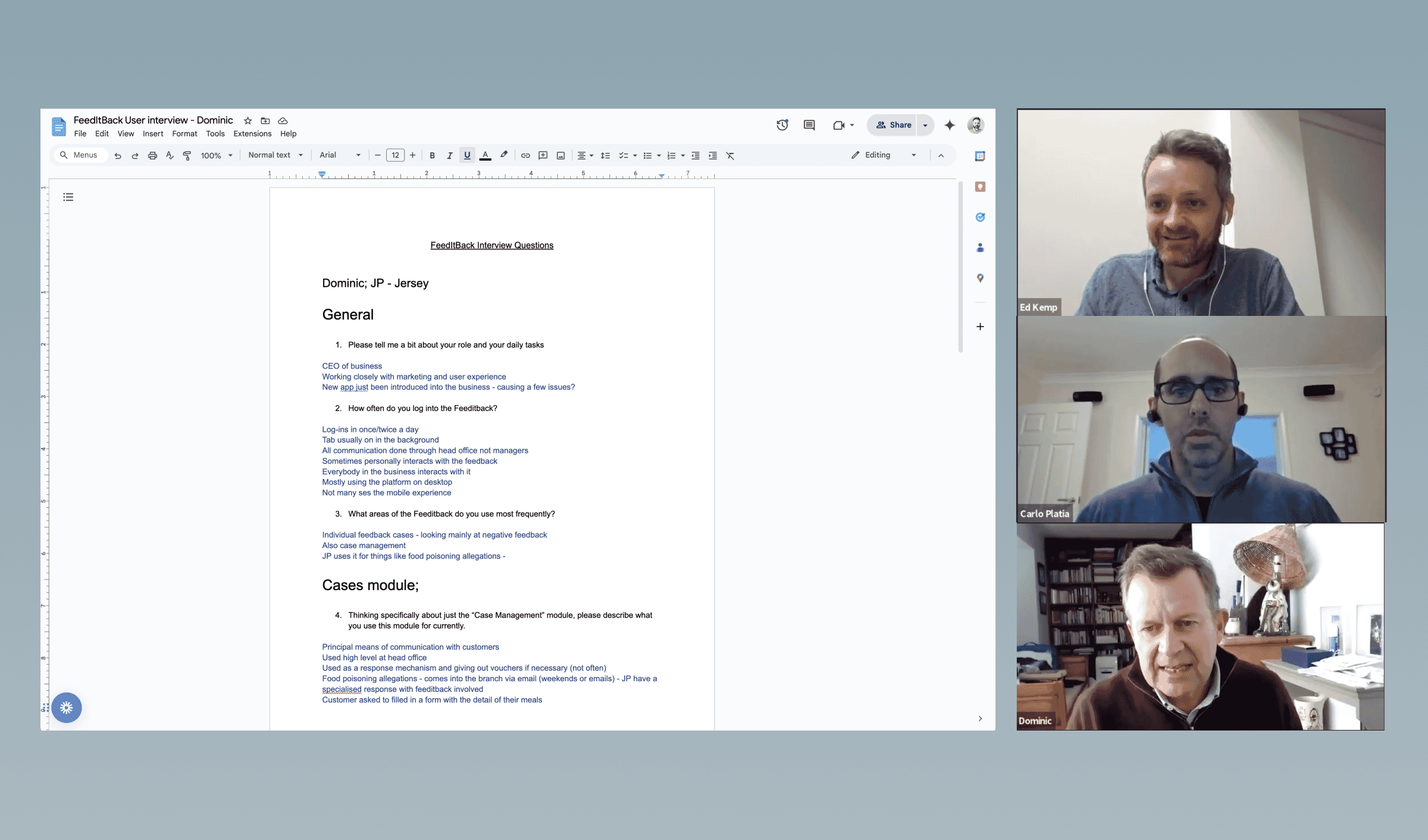
Stakeholder interviews are a process of engaging with relevant individuals involved in a project to gather valuable insights, perspectives, and feedback, which inform and shape the design process and foster collaborative decision-making.

User research method, user research interviews conducted remotely.

The voices of influence

We conduct stakeholder interviews to gain a clearer understanding of the project’s goals, objectives, and overall vision. This understanding is vital to ensure the design process supports and reflects the broader business strategy rather than existing in isolation. If stakeholders are not consulted early, there is a risk that the final product will miss important success factors or misunderstand critical constraints. For example, budget limits or technical requirements may only become apparent late in the process, leading to costly redesigns or delays.

Stakeholder interviews help identify these factors upfront, reducing risk and preventing misalignment. Beyond risk mitigation, these conversations foster a sense of collaboration and shared ownership. When stakeholders feel heard and involved from the start, they are more likely to actively support the design decisions and champion the project internally. This early buy-in can be crucial for smoothing the path to implementation and adoption.
Navigating stakeholder interviews

While stakeholder interviews are powerful tools, their effectiveness depends on thoughtful planning and execution. The first step is to identify who to include. Relevant stakeholders often span multiple roles and departments: clients, project managers, product owners, marketing teams, developers, and sometimes end users or external partners. Selecting the right mix ensures a comprehensive understanding of project needs and constraints.

Next, the interview questions must be carefully crafted. Open-ended questions tailored to each stakeholder’s role help explore their goals, challenges, expectations, and concerns. For example, a product owner may be focused on feature priorities, while a developer might highlight technical limitations. Active listening and follow-up questions are essential to dig deeper and uncover insights that may not be immediately obvious.

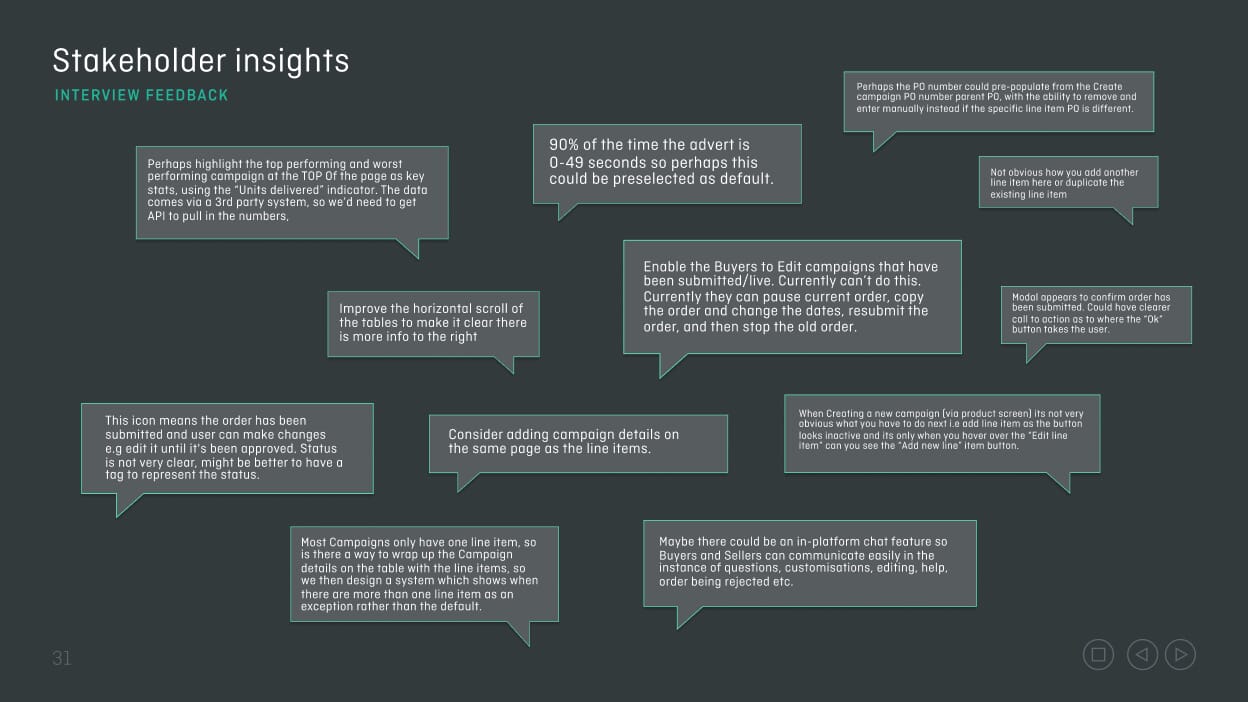
Once interviews are complete, the real work begins in analysing and synthesising the qualitative research insights gained. We look for patterns and recurring themes, noting both alignment and conflicting viewpoints. This process helps clarify priorities, reveal gaps, and inform decisions about scope and requirements. Sharing a summary of these findings with the wider team can validate insights and promote transparency.


Increased perspective leads to long-term success

The insights gained from the stakeholder interview process have a direct impact on the quality and relevance of design decisions going forward. By aligning design goals with stakeholder objectives, we ensure solutions address real business needs and user expectations. 

Importantly, stakeholder interviews also provide a reality check that challenges assumptions. Early identification of potential issues prevents costly mistakes and rework later. For example, assumptions about user behaviour or technical capacity can be tested and adjusted based on feedback from those closest to the project.

Another key benefit is fostering collaboration. These interviews create a shared understanding and language among diverse teams, breaking down silos. Stakeholders feel valued and heard, which encourages openness and trust. This foundation of transparency and alignment supports smoother decision-making throughout the project lifecycle and increases the likelihood of success.

Typical outcomes include

  • A comprehensive stakeholder map identifying key individuals and groups relevant to the project
  • An insights report summarising stakeholder goals, pain points, priorities, and any perspectives that conflict with any prior UX research
  • Refined project requirements aligned with business goals and user needs
  • Early identification of budget, timeline, and technical constraints that may impact delivery
  • Greater stakeholder engagement and commitment to the project’s success
  • Clear communication channels established to support ongoing collaboration
  • Reduced risk of expensive changes by addressing challenges early in the process
  • Enhanced trust and shared ownership among project teams, improving overall morale and productivity

FAQs

Who should we include in stakeholder interviews?

We recommend involving a broad range of individuals who have a direct or indirect interest in the project. This usually includes clients, project managers, product owners, marketing teams, developers, and sometimes end users or external partners – see our separate page for more on our user interview process. The exact mix depends on your project’s scope and complexity.


How long do stakeholder interviews typically take?

Each interview usually lasts between 30 and 60 minutes. The number of interviews depends on the number of key stakeholders identified. We work with you to plan a manageable schedule that gathers comprehensive insights without overburdening your team.


What if stakeholders have conflicting priorities?

Conflicting views are common and expected. The goal of stakeholder interviews is to surface these differences early so we can understand them, find common ground, and make informed trade-offs when defining project scope and design decisions.

How do the interviews affect the overall project timeline?

While stakeholder interviews add time upfront, they help prevent costly changes and delays later by clarifying expectations and requirements early. This can save time and resources over the course of the project, leading to smoother delivery.

Book a virtual coffee

Speak directly with our founders Ed and Jon about how we can help you on your Innovation or Transformation project.

Contact
Ed & Jon

Contact details

Find us

Cheyenne House
West Street
Farnham, Surrey
GU9 7EQ

Cheyenne House
West Street
Farnham, Surrey
GU9 7EQ

Contact form

Looking for a long term partner to support your business?

By browsing our website you agree to our cookie policy. You can opt-out anytime from our cookies page