Defining Success

At the start of a project, it’s easy to talk in general terms about what success might look like; “better engagement,” “a smoother experience,” “more users.” But unless those goals are clearly defined and agreed, it’s difficult to know what to focus on, how to prioritise, or whether a design is working exactly as intended. This is where our Defining Success workshop comes in.

Our ‘Defining Success’ workshop session brings teams together to align around shared objectives and clarify how success will be measured across a project. Using business priorities and user needs as a foundation, we guide teams through setting SMART goals and identifying the metrics that will track progress along the way.

It’s a focused step early in the project that helps ensure everyone is working toward the same outcomes, and that those outcomes are grounded in evidence rather than assumptions.

Why define success upfront?

Design work doesn’t exist in a vacuum. Every decision about structure, flow, interaction, or content should ultimately serve a broader project goal or organisation objective. That might mean improving user satisfaction, increasing task completion, or reducing friction during onboarding. But unless success is clearly defined, it’s hard to judge whether the work is effective or where to make trade-offs.

Defining what success means to you and your team clearly, with established measurables upfront, prevents teams from chasing vague goals or relying on instinct alone. Instead, it focuses attention on specific shifts in user behaviour or perception; what people do and how they feel. It also gives projects a framework for testing, decision-making, and iteration. We’ve found that when priorities are clear, evidence becomes easier to act on.

This session is also invaluable for us as we take all the insights from the sessions and use it towards knowing how to improve your product. It ensures that every step we take is purposeful, directly tied to your goals, and aimed at measurable results. With this clarity from the outset, we can make informed trade-offs, adapt if priorities shift, and keep every stakeholder aligned. This shared definition of success becomes a ‘North Star’ for the design process, helping us test, iterate, and deliver outcomes that meet your expectations in a tangible way.
What the workshop covers

This session combines structured activities with open discussion, helping teams articulate what matters most and how that can be measured.

Surface individual and organisational goals

We start by giving participants space to reflect on what they personally hope to achieve through the project, as well as any concerns or constraints they bring. This initial step helps to create a shared understanding of expectations across roles and teams.

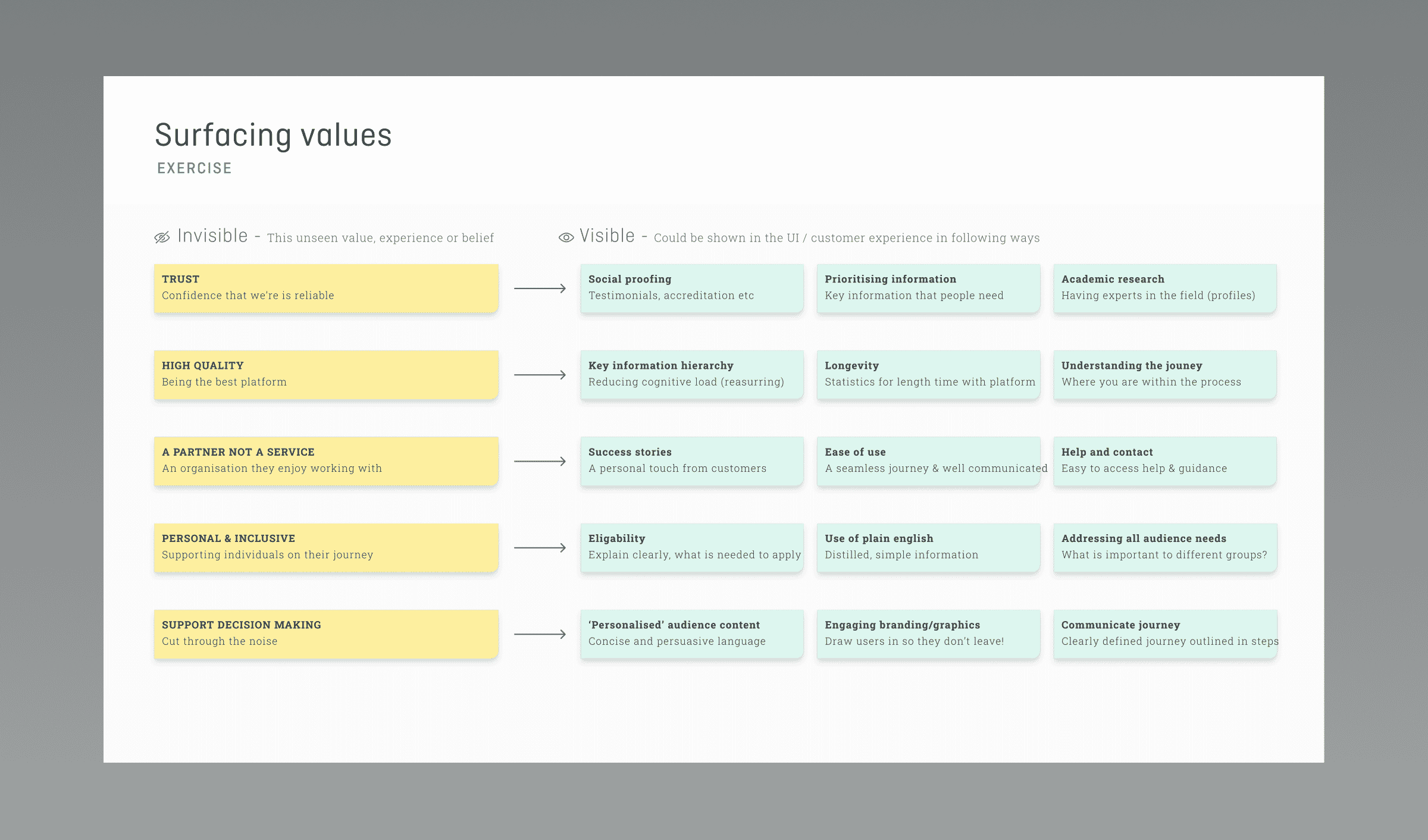
Clarify values and underlying motivations

Next, we would typically explore the ideas and beliefs that shape your product, service, or organisation. These often ‘invisible’ and ‘un-codified’ values actually influence how success is understood, both internally as an organisation and by end users. Identifying them early helps ensure they’re reflected in both the process and the final design.

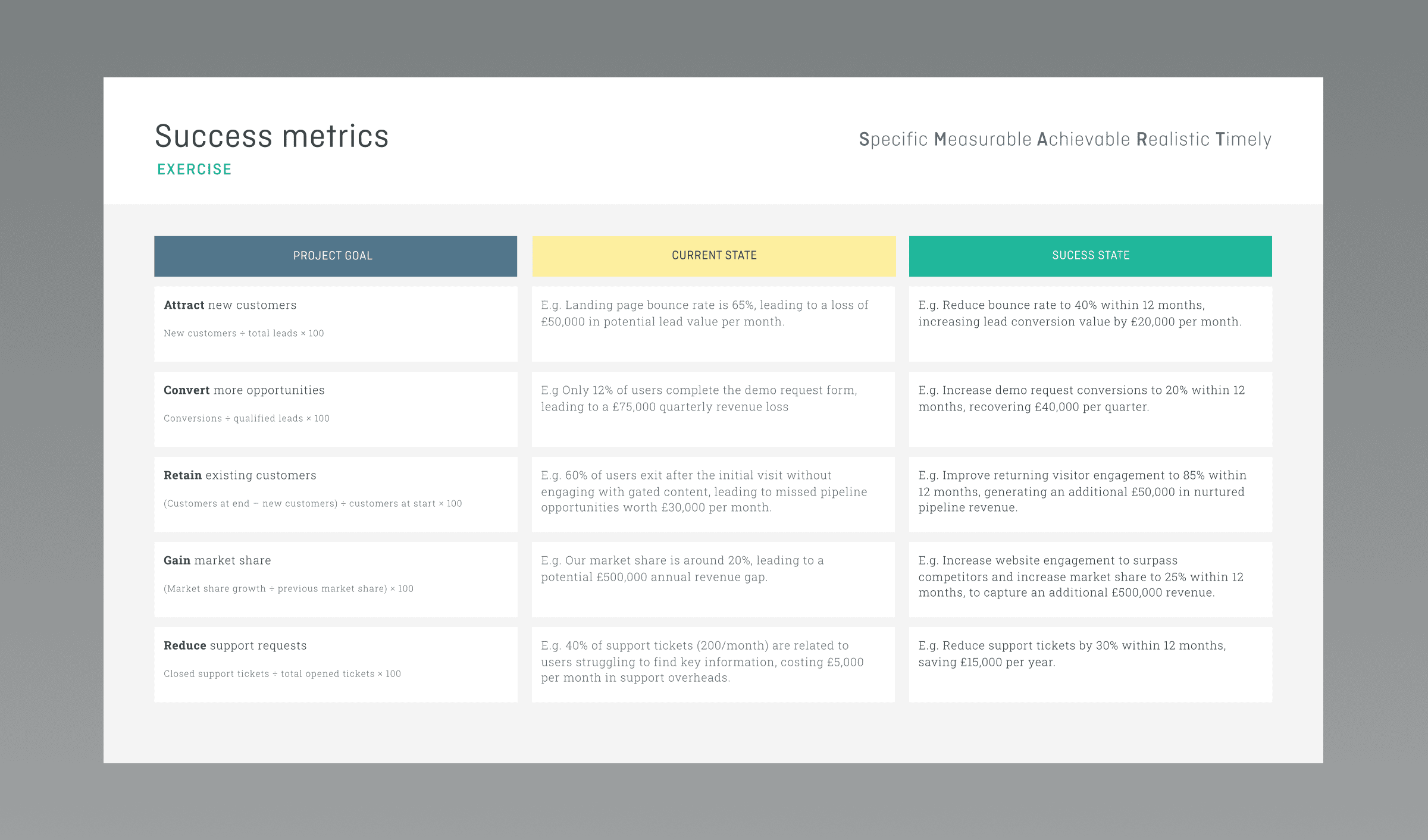
Define success states and measurement criteria

Working collaboratively, we then map out the current state and a desired future state. This can include both qualitative shifts (e.g. increased trust, reduced frustration) and quantitative improvements (e.g. higher task completion, lower bounce rates). From there, we identify the best ways to track and measure progress, using metrics that are meaningful for your product and users.

Assess performance in context

We look beyond your own product to understand where it sits within the wider market. Reviewing competitors or benchmarks can help clarify strengths, weaknesses, and opportunities for differentiation. It also ensures goals are realistic, given current constraints and ambitions.

Summarise the mission

To close the session, we consolidate what we’ve learned into a single mission statement which serves as a simple articulation of what the project is ultimately trying to achieve, and why it matters. This becomes a reference point throughout the design process that you can always come back to.


Types of goals and metrics we help define

The outputs of this session usually include a mix of:

  • Qualitative goals – based on how users feel or perceive the experience. For example, do users trust the information presented? Do they feel confident completing a task?
  • Quantitative goals – based on observed user behaviour or system performance. For example, are more users completing a journey? Are fewer people dropping off at a specific step?

By combining both, we help you build a fuller picture of what success really looks like for your specific project/business needs.

Typical outcomes include:

  • A shared understanding of what success means across teams
  • A shortlist of SMART goals tailored to your project
  • A working set of performance indicators linked to user needs and business value
  • A clearer basis for prioritising features and testing approaches
  • A focused mission statement to guide the rest of the work

FAQs

How long does the workshop take?

It’s typically a half-day session (around 3 hours), but this can be adapted depending on the number of stakeholders involved or the complexity of the project. Some clients also combine it with other workshops to form part of a longer discovery phase.

Who needs to be involved?

Ideally, a mix of voices. That might include product owners, designers, developers, marketers, customer support leads, and anyone else with a stake in the project’s success. The aim is to get a rounded view, not just one team’s perspective.

What if we don’t have good data yet?

That’s okay. The workshop doesn’t require existing analytics or research, though they’re helpful if available. We’ll work with what you have, and part of the process involves identifying what evidence is missing and how to gather it later.

What do we get out of the session?

You’ll leave with a shared set of SMART goals, a list of success criteria grounded in both user needs and business aims, and a working mission statement to guide future design and research decisions. We also provide a summary document for internal reference.

Can you help us track these goals later on?

Yes. We often support clients in setting up measurement frameworks, interpreting test data, and refining goals as the product evolves. Defining success is the first step, but it’s just as important to keep evaluating and adjusting over time.


Book a virtual coffee

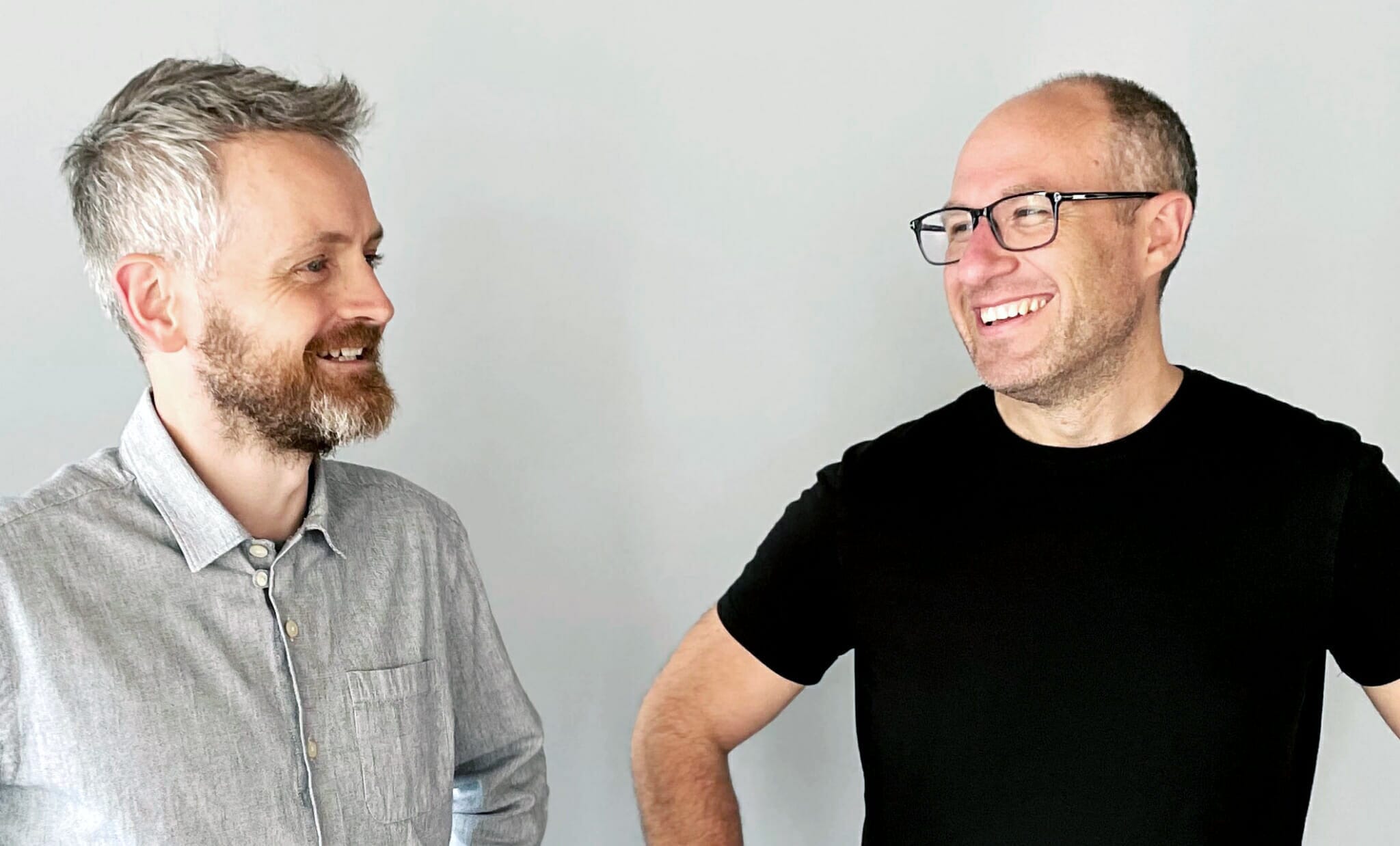
Speak directly with our founders Ed and Jon about how we can help you on your Innovation or Transformation project.

Contact
Ed & Jon

Contact details

Find us

Cheyenne House
West Street
Farnham, Surrey
GU9 7EQ

Cheyenne House
West Street
Farnham, Surrey
GU9 7EQ

Contact form

Looking for a long term partner to support your business?

By browsing our website you agree to our cookie policy. You can opt-out anytime from our cookies page