Service design mapping

Service design mapping is the process of visually presenting the entire service ecosystem to identify user needs, pain points, and operational gaps across both front-stage and back-stage actions.


Interactions between users, interfaces and physical touchpoints

We often work on complex, technical systems that take time and experience to fully understand. In many cases, a service is initially explained in terms that make sense to the business or technical team, but not in a way that reflects how users actually experience it. 

Service mapping allows us to break down the service into manageable sections and plot the flow of people, processes, and tools from beginning to end in a way that’s grounded in reality and easy to understand. This helps surface the real issues that interrupt the user experience and hinder the overall customer journey.


Service design best practices

Our service design mapping process begins with understanding the full ecosystem, including all user touchpoints, internal systems, third-party integrations, and interactions across channels. We run collaborative sessions with our clients, bringing in a range of stakeholders to unpack how the service currently works from a functional, technical, and user perspective. We also use any existing research, provided by you, to ground the mapping in pre-identified user needs and behaviours across each customer journey.

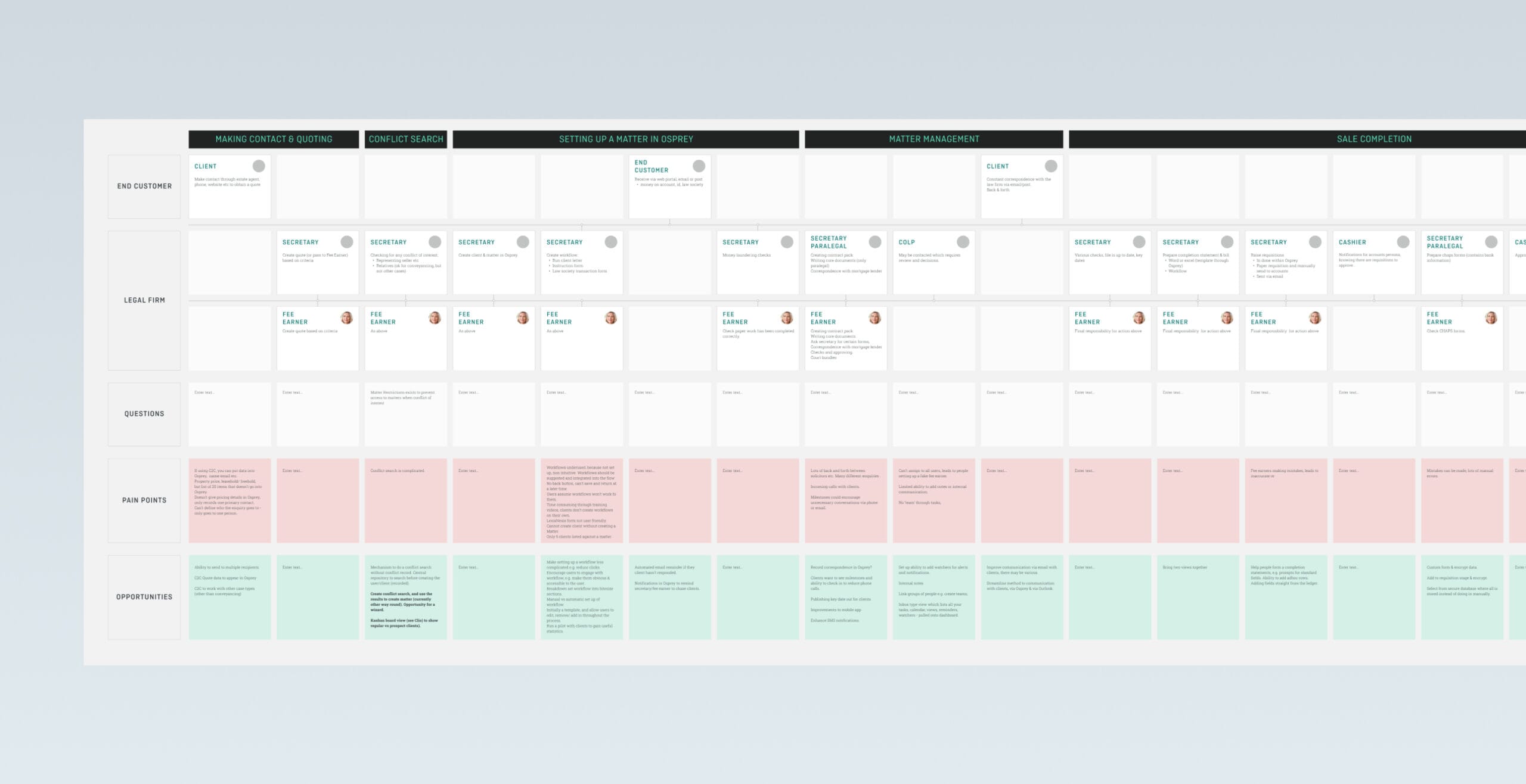
From here, we often move on to developing one of the key deliverables from our service mapping process – the service blueprint. This is a visual diagram that shows both the user-facing journey and the behind-the-scenes actions, systems, and roles that support it. They serve as crucial artefacts in the broader design process that enable teams to pinpoint disconnects between what users expect and what the service actually delivers.

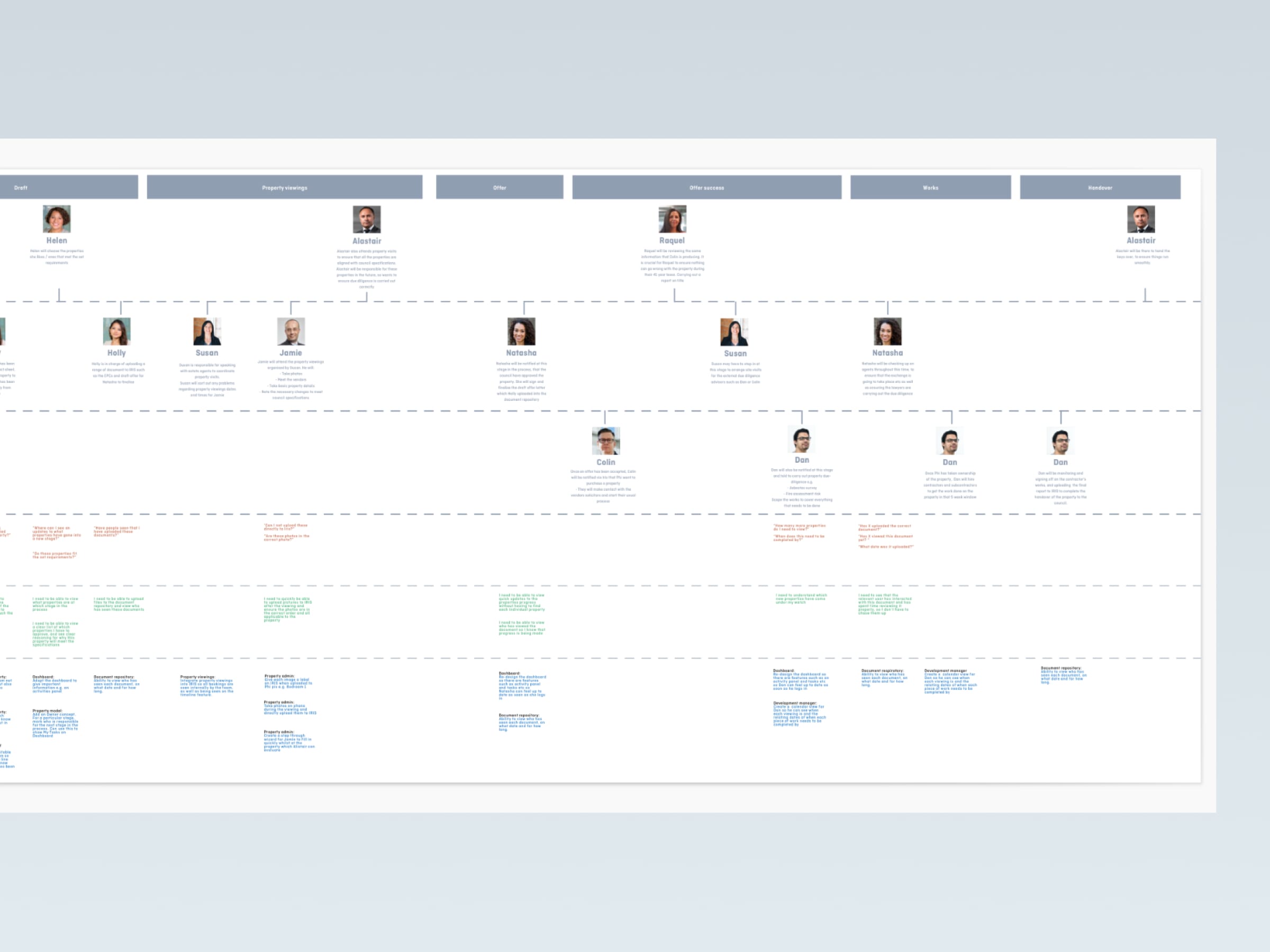
Mapping can take the form of focused journey maps for a single user type or expanded diagrams that account for interactions between different user roles. Mapping a single user journey in detail is useful for identifying pain points specific to that user experience, while combining journey maps helps show how interdependent experiences affect the wider system. This allows us to explore alternative, more efficient ways of operating that still support the user’s goals at every stage of their customer journey.

We also integrate service blueprints into the ongoing design and delivery workflow. These not only act as shared reference points for teams, but also make it easier to onboard new team members, run usability reviews, and inform future iterations of the service or product without missing any of the detail.


Service design mapping

Designing exceptional user experiences

Service design mapping is especially valuable when working on complex products with multiple users and internal touchpoints. It increases alignment across teams by turning abstract systems into shared, visual artefacts that support better collaboration. The process makes it easier to identify operational challenges, understand dependencies, and prioritise improvements, all within the context of the customer journey.

As service designers, we can bring structure, objectivity, and design thinking to these mapping sessions to help your team move from internal assumptions to a shared understanding grounded in user needs, real-world service flows, and actionable journey maps. Our outputs provide lasting value throughout the design process.

Typical outcomes include:

  • A clear visual representation of your current or future-state service design
  • A service blueprint that includes both front-stage and backstage elements
  • Identification of user pain points, operational inefficiencies, and bottlenecks
  • Stakeholder alignment on service goals, roles, and responsibilities
  • Better foundations for product strategy, roadmap planning, and experience design
  • Supporting artefacts such as journey maps, service blueprints, and workshop outcomes
  • A shared reference point that supports future iterations and delivery

A bridge to design and development

Service design mapping is one of the final and pivotal stages between research and design or development planning. At the end of this exercise, we have a clear view of the services required to keep the platform operating effectively. It highlights the backend systems that need to be in place and shows how multiple user processes connect and overlap. This richer understanding helps us see which areas and teams to prioritise first, ensuring that planning and delivery are grounded in the full service context.


FAQs

What’s the difference between service design mapping and user journey maps? 

User journey maps focus on the experience of a single user type as they interact with service providers. They highlight goals, pain points, and emotional responses. Service design mapping takes a broader view by capturing both front-stage and backstage elements, including internal systems, staff roles, and dependencies. This broader view allows us to plan how the redesign needs to work, and where improvements are necessary to streamline processes. Used together, these tools help you fully understand and improve the customer experience.


Why do I need a service blueprint if I already have customer journey maps?

A service blueprint builds on what a journey map shows by revealing how internal operations support the user experience design. Service blueprinting helps identify delivery gaps, inconsistent processes, or hidden friction that journey maps alone might not show. It connects what customers see to what needs to happen behind the scenes.


What kinds of teams should be involved in service design mapping sessions?

We recommend involving teams from across the business. This might include product, operations, customer support, and technical staff, depending on the service. Including a mix of roles ensures the full picture is captured and creates shared understanding and buy-in across departments.


Can service design mapping help if we’re not building a new product?

Yes, it is often more useful for reviewing existing services that have become complex or unclear over time. Mapping what currently exists using service blueprinting and journey maps helps uncover inefficiencies and misalignments. It also supports better decisions about where to make changes to improve the customer experience.


Book a virtual coffee

Speak directly with our founders Ed and Jon about how we can help you on your Innovation or Transformation project.

Contact
Ed & Jon

Contact details

Find us

Cheyenne House
West Street
Farnham, Surrey
GU9 7EQ

Cheyenne House
West Street
Farnham, Surrey
GU9 7EQ

Contact form

Looking for a long term partner to support your business?

By browsing our website you agree to our cookie policy. You can opt-out anytime from our cookies page