RICE and MoSCoW scoring services

Prioritisation frameworks like RICE and MoSCoW help teams make clearer, evidence-based decisions about what to build next. They provide a structured way to assess the relative value and feasibility of product ideas, ensuring that resources are directed toward the most impactful and realistic work.

By scoring features or initiatives using these frameworks, we’re able to evaluate not just how desirable something is, but how viable it is within the current context of time, budget, user needs, and strategic goals.

RICE scoring: assessing impact and feasibility

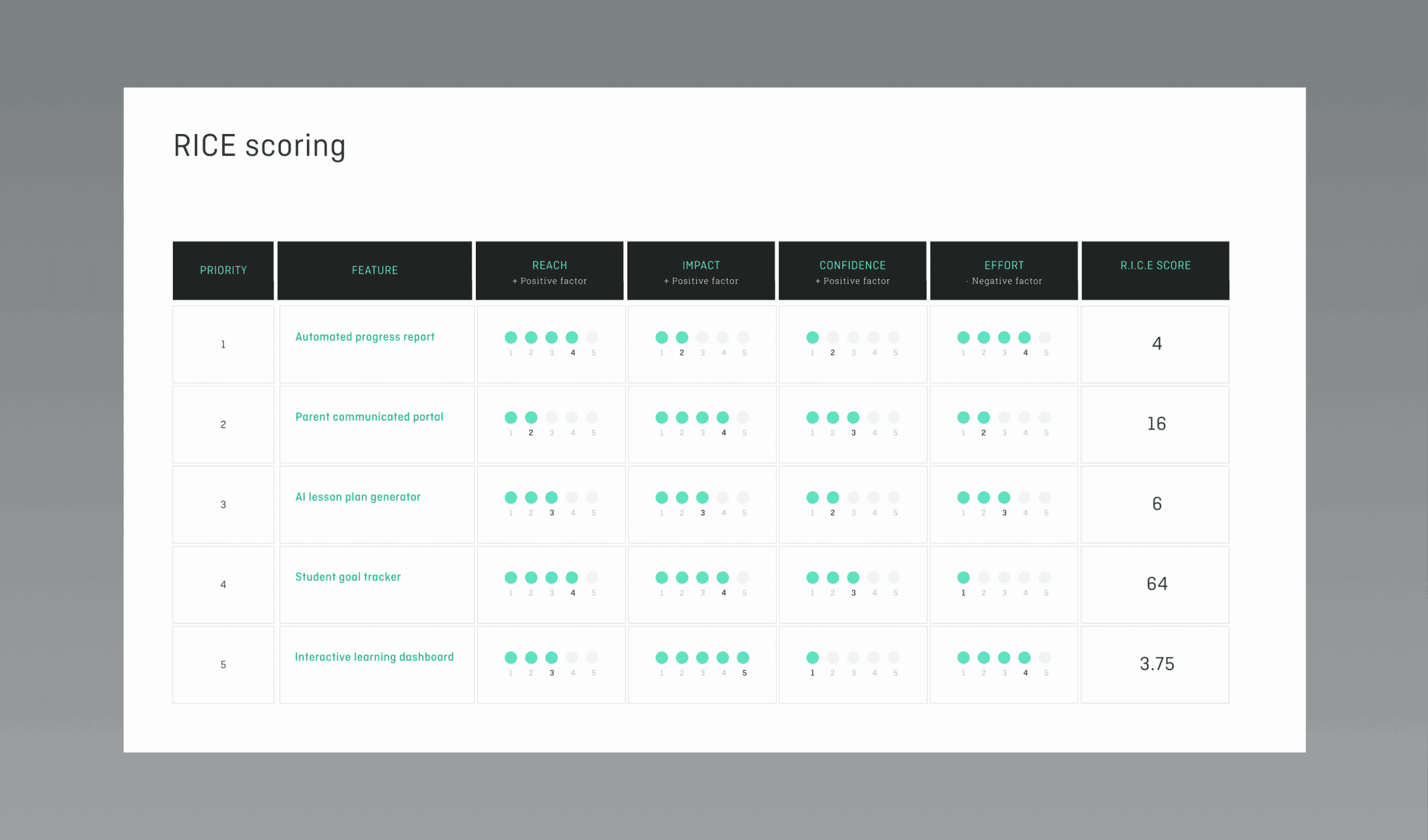
The RICE framework is a quantitative method for comparing feature or initiative ideas. It scores each idea across four factors:

  • Reach – How many users will be affected by this change?
  • Impact – How much value will it bring to each of those users?
  • Confidence – How certain are we about our assumptions?
  • Effort – How much time and resource will it take to deliver?

Each idea is given a RICE score, which helps rank and compare options more objectively. This makes it easier to spot ideas that are high-impact and low-effort, or to de-prioritise those that may be appealing, but resource-heavy or low-confidence.

We often use RICE scoring in situations where there’s a long list of potential features or design changes, but limited development bandwidth. It helps focus attention on what’s most likely to deliver meaningful value now.


MoSCoW scoring: clarifying criticality and timing

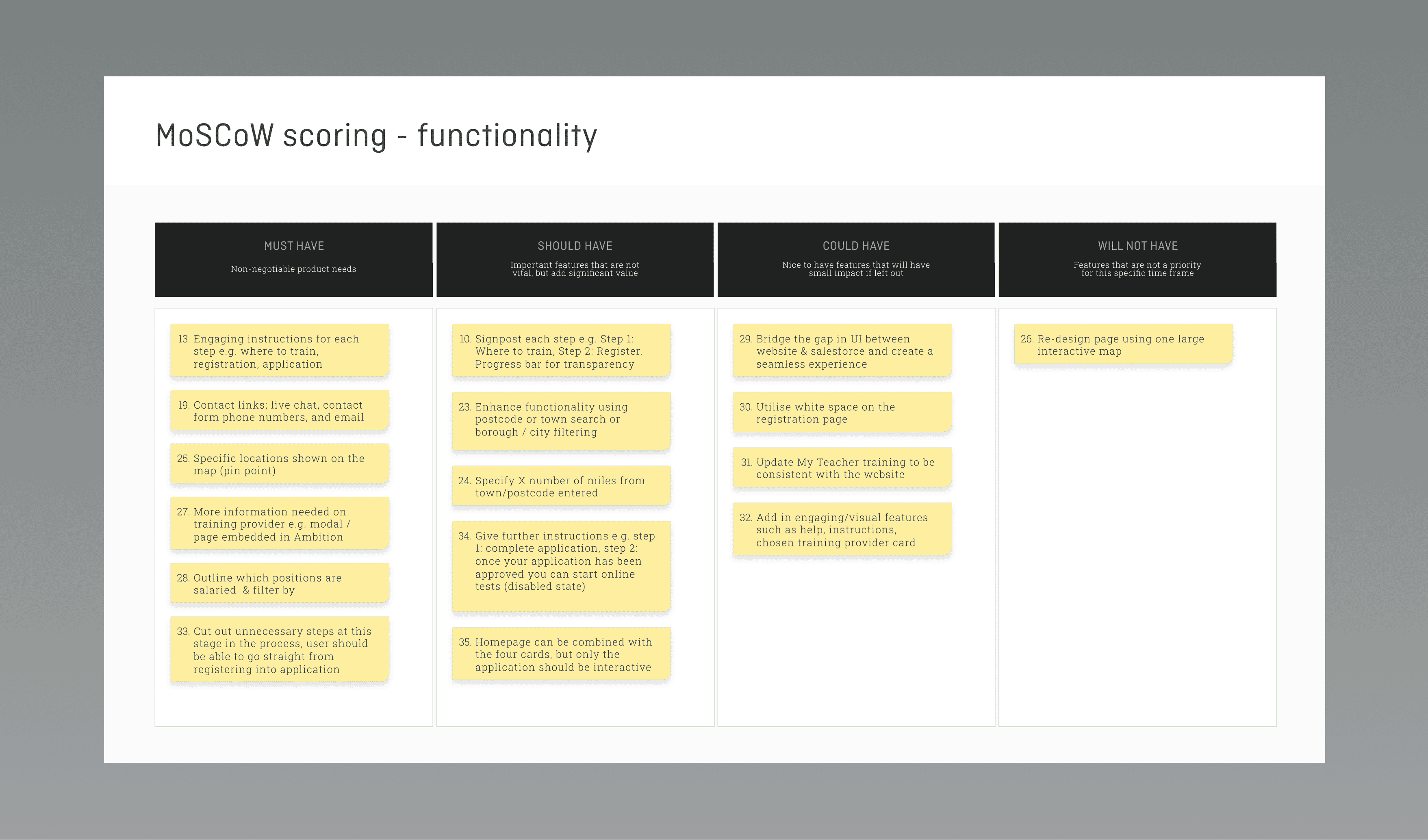
The MoSCoW framework takes a different approach. Rather than assigning a numeric score, it categorises each item into one of four levels of priority:

  • Must-have – Non-negotiable requirements needed for success
  • Should-have – Important but not essential; deliverable if time allows
  • Could-have – Nice-to-have features that add value but are not critical
  • Won’t-have (for now) – Agreed as out of scope for the current phase

This model is particularly helpful when creating roadmaps or MVPs, as it forces clear alignment on what is absolutely essential. It also supports better conversations around scope and trade-offs, helping to avoid overloading a sprint or misaligning stakeholder expectations.

Where RICE helps weigh return on investment, MoSCoW focuses more on timing, dependency, and minimum viable delivery. Used together, they give both quantitative and qualitative insight into how work should be prioritised.

Applying scoring frameworks to real projects

We use RICE and MoSCoW scoring at different stages of the product lifecycle:

  • During discovery, to assess the potential of early ideas before too much effort is spent
  • After research or testing, to prioritise the most actionable findings
  • When planning roadmaps, to organise work into practical, phased releases
  • As part of design reviews, to ensure limited resource goes to the right problems

By applying structured scoring to feature or design discussions, we help teams avoid defaulting to opinion, instinct or hierarchy. Instead, decisions are made with shared criteria and clear rationale.

Outcomes and benefits

The use of RICE and MoSCoW scoring produces clarity, both in what to do and why.

Typical outcomes include:

  • A prioritised backlog with rationale that’s easy to communicate and defend
  • A shared understanding of what’s possible now, and what may need to wait
  • Better alignment across product, design and development teams
  • Reduced risk of over-committing or focusing on low-value work
  • A practical roadmap that reflects both business needs and delivery constraints

This clarity helps teams move forward with greater confidence, knowing that time and effort are being spent in the most effective way possible.

Supporting confident, evidence-based decisions

At Full Clarity, we use RICE and MoSCoW scoring as part of a broader evidence-led approach. While these frameworks don’t replace user research or product strategy, they complement them, turning insight into action by helping prioritise what comes next.

By making scoring part of the design and planning process, we support more efficient roadmapping, more focused team discussions, and better use of budget and development time. Ultimately, they’re tools that help ensure you’re building the right thing, at the right time, for the right reasons.

FAQs

What’s the difference between RICE and MoSCoW scoring, and when should each be used?

RICE is ideal for ranking features or initiatives based on value versus effort. It considers Reach, Impact, Confidence, and Effort to give a weighted score that helps teams prioritise efficiently. MoSCoW, on the other hand, helps categorise features by criticality: Must-have, Should-have, Could-have, and Won’t-have, which is useful when shaping the scope of a release or MVP. We often use both together, depending on the stage and goals of the project.


Do I need a lot of data to apply RICE or MoSCoW scoring?

No, these frameworks are designed to work with estimates. RICE inputs like Reach and Impact can come from analytics, user research, or internal expertise. MoSCoW is typically driven by team alignment and stakeholder needs. The process is structured but flexible, making it useful even when data is incomplete or evolving.

Can Full Clarity run the scoring process with our team?

Yes. We can facilitate collaborative scoring sessions, either in person or remotely, to ensure inputs reflect real priorities and constraints. Alternatively, we can apply the frameworks ourselves and present the outcomes for feedback and refinement. Our goal is to support clear, confident decision-making, whether we’re leading the session or embedding the method into your own processes.

Book a virtual coffee

Speak directly with our founders Ed and Jon about how we can help you on your Innovation or Transformation project.

Contact
Ed & Jon

Contact details

Find us

Cheyenne House
West Street
Farnham, Surrey
GU9 7EQ

Cheyenne House
West Street
Farnham, Surrey
GU9 7EQ

Contact form

Looking for a long term partner to support your business?

By browsing our website you agree to our cookie policy. You can opt-out anytime from our cookies page